Mastering Firearm Skills with Consistent Training: Firearm Training Essentials
- Calvin Weeks

- Jul 2
- 4 min read
Mastering firearm skills requires more than just owning a weapon. It demands consistent, focused training that sharpens your abilities, enhances safety, and builds confidence. Whether you are a beginner or an experienced shooter, regular practice is the cornerstone of proficiency. This article provides you with clear, actionable guidance on how to develop and maintain your firearm skills through disciplined training.
Understanding Firearm Training Essentials
To excel in firearm handling, you must first grasp the fundamentals of firearm training essentials. These include safety protocols, marksmanship, weapon maintenance, and situational awareness. Each element plays a critical role in your overall competence and readiness.
Safety Protocols: Always treat every firearm as if it is loaded. Follow the four cardinal rules of gun safety: keep the muzzle pointed in a safe direction, keep your finger off the trigger until ready to shoot, know your target and what is beyond it, and ensure the firearm is unloaded when not in use.
Marksmanship: Focus on grip, stance, sight alignment, and trigger control. These basics form the foundation of accurate shooting.
Weapon Maintenance: Regular cleaning and inspection prevent malfunctions and extend the life of your firearm.
Situational Awareness: Understand your environment and potential threats. This skill is vital for self-defense scenarios.
By mastering these essentials, you create a solid base for advanced training and real-world application.
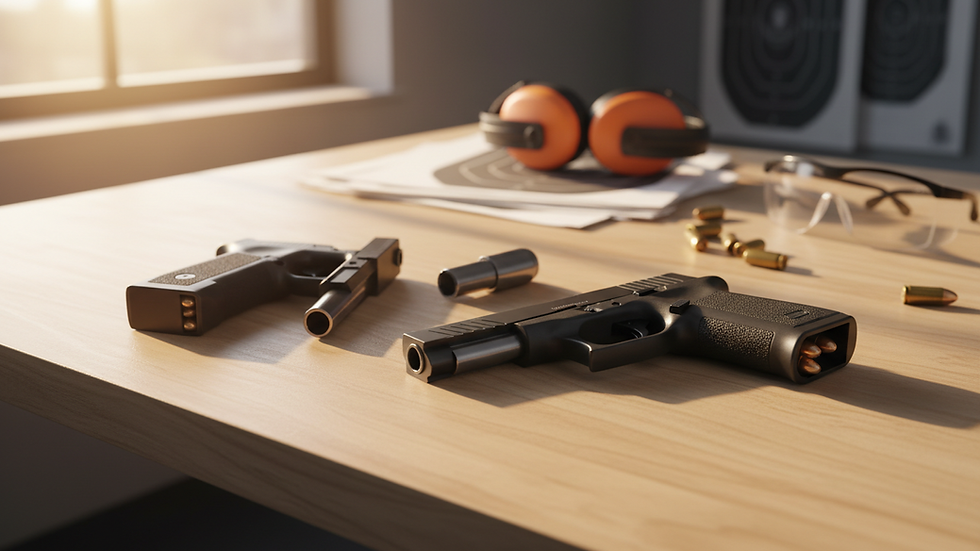
Building Consistency in Your Training Routine
Consistency is the key to mastery. Establish a training schedule that fits your lifestyle and stick to it. Aim for at least one to two sessions per week, each lasting 30 to 60 minutes. This frequency allows you to reinforce skills without overwhelming yourself.
Here are practical steps to build consistency:
Set Clear Goals: Define what you want to achieve in each session. For example, improving reload speed or enhancing accuracy at 15 yards.
Track Your Progress: Use a training log to record drills, scores, and observations. This data helps identify strengths and areas needing improvement.
Vary Your Drills: Incorporate different exercises such as dry firing, live firing, and scenario-based drills to keep training engaging and comprehensive.
Include Physical Conditioning: Strength and endurance impact your shooting performance. Incorporate exercises that improve grip strength, core stability, and cardiovascular health.
Consistency not only improves your skills but also builds muscle memory, making your responses automatic under stress.
What is the 3-3-3 Rule in Self-Defense?
The 3-3-3 rule is a practical guideline to help you manage self-defense situations effectively. It breaks down into three components:
3 Seconds: The time you have to recognize a threat and decide to act.
3 Feet: The distance within which a threat becomes immediate and requires defensive action.
3 Shots: The minimum number of shots recommended to neutralize a threat effectively.
Understanding and applying this rule helps you maintain situational awareness and respond decisively. Training to react within these parameters enhances your ability to protect yourself and others.
Enhancing Accuracy and Speed Through Targeted Drills
Improving your marksmanship involves focused practice on both accuracy and speed. Here are specific drills to incorporate into your training:
Dot Torture Drill: This drill challenges your precision by requiring you to hit small targets repeatedly. It improves sight alignment and trigger control.
Bill Drill: Practice firing six shots at a target 7 yards away as quickly and accurately as possible. This drill enhances your ability to deliver rapid, controlled shots.
Reload Drills: Practice both tactical and emergency reloads to ensure you can maintain readiness during a confrontation.
Movement Drills: Combine shooting with movement to simulate real-life scenarios where you must engage targets while changing positions.
Use a timer to measure your performance and aim to reduce your times while maintaining accuracy. For example, a good benchmark for the Bill Drill is under 2 seconds with all shots on target.

Integrating Mental Preparedness and Stress Management
Firearm proficiency is not solely physical; mental preparedness is equally critical. Stress can impair judgment and motor skills, so training under simulated stress conditions is essential.
Visualization Techniques: Mentally rehearse scenarios to build confidence and reduce anxiety.
Controlled Breathing: Practice breathing exercises to maintain calm and focus during high-pressure situations.
Scenario-Based Training: Engage in realistic drills that mimic potential threats, including low-light conditions and multiple assailants.
Decision-Making Drills: Train to make quick, lawful decisions about when and how to use your firearm responsibly.
By integrating mental training, you prepare yourself to act decisively and responsibly when it matters most.
Maintaining Safety and Responsibility in Firearm Use
Your commitment to safety and responsibility must be unwavering. Always follow legal requirements and ethical considerations related to firearm ownership and use. Regularly review local laws and regulations to stay informed.
Store firearms securely using safes or lockboxes.
Educate family members, especially children, about gun safety.
Participate in refresher courses to keep your knowledge current.
Avoid complacency by treating every training session as a serious exercise.
Responsible firearm ownership protects you, your loved ones, and your community.
Mastering firearm skills through consistent training is a continuous journey. By focusing on the essentials, maintaining a disciplined routine, and integrating mental preparedness, you enhance your ability to respond effectively and safely. For more detailed guidance and expert advice, explore resources like this firearm training blog to deepen your knowledge and refine your skills.



Comments